


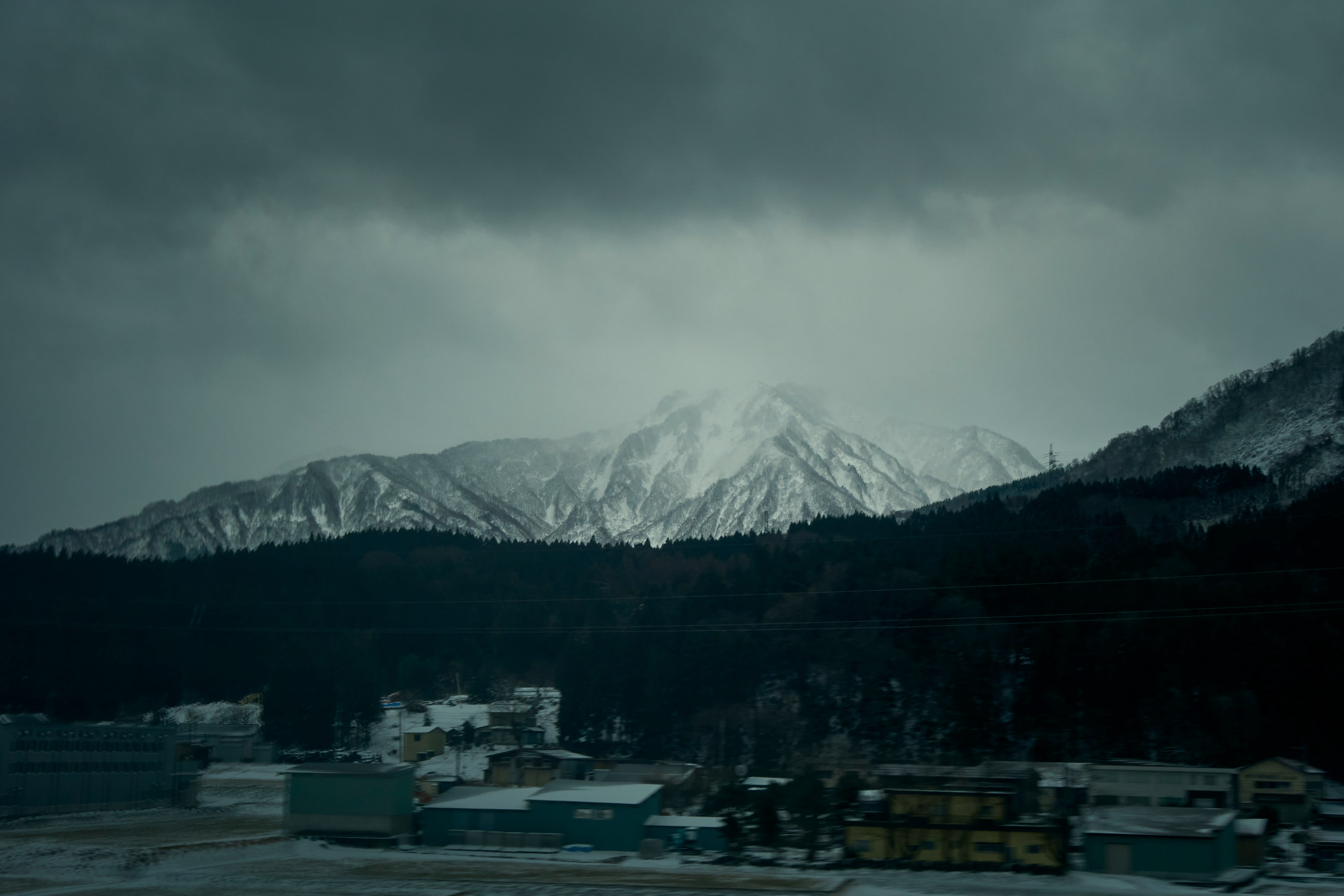
It wasn’t as though Greg had been one of those oppressive and alienating fathers one reads about in fiction. No Herr Kafka, he’d always tried to be maximally open-minded about what “success” might look like for Perry. His own father, a hard man with hardened hands and a hardened, one might even say ossified, set of conceptions about the way things ought to be, had been every bit the demanding, impossible-to-please sort of father to Greg that Perry stubbornly insisted on seeing Greg as having been to him. And who knows, there was an outside chance of the kid being right, Greg figured. He well knew that people were not always particularly accurate in their self-assessments. He knew that it was by no means uncommon to replicate the normalized dysfunction of one’s childhood as an adult. Yes, maybe Perry was right and he was wrong—but try as he might, Greg just couldn’t see it.
Whoever’s view was closer to the truth, the fact remained that Perry saw things the way he did. He was unshakably convinced that, when his father was not directly denigrating him, he was unleashing a ceaseless barrage of deliberate, backhanded, undermining barbs. Perry felt that his every effort to re-orient the ship of his life toward the True North of purpose and fulfillment was greeted, at best, with a half-suppressed sigh and a half-audible, passive-aggressive mutter. He felt that the clarifying questions his father asked him about his plans were not good faith efforts to better understand, but instead were traps, snares to make him look foolish when he didn’t quite know how to answer them. And to these perceived attacks, Perry inevitably reacted with either sullenness or petulant wrath.
Greg was certain, certain, that Perry was simply in error. Perhaps he’d been clumsy or insensitive in the way he’d expressed his concerns, but was it really such a crime to ask the kid to consider practicalities? To think, if just for a second, about what he might want his life to look like ten years in the future? To ask himself if it made any kind of sense to throw away a job with six figure potential (which Greg had called in a favor to help him get) to go work the door at a comedy club? And if Perry had given serious consideration to practical questions and still felt that improv comedy was what he needed to do, well that would be fine. But instead of responding to an honest question like an adult, there’d been the usual fireworks followed by a month of radio silence.
At the end of the day, all Greg really wanted was for his son to be something. Almost anything would do, as long as the kid demonstrated a little follow-through and stuck with the new “passion” for more than a few months. How different that attitude was from Greg’s father’s intolerance! Greg couldn’t imagine the ruthless derision he would have drawn if he’d signed up for the high school drama club! His father would have called him a faggot to his face! And if he’d tried to move back into the house in his twenties, with no job, no plan, and a weed habit… simply unimaginable. But after all, how could Perry possibly have known what real paternal tyranny looked like, Greg sometimes thought to himself. While never having experienced authoritarian parenting was, in many ways, a privilege which left many possibilities open to his son which had never been open to him, it had also left Perry with a lack of appreciation of how good he had it, as well as a softness in the face of the slightest criticism. If he needed to view his father as a tyrant, then Greg would be that tyrant, the father figured—anything to ensure that his son eventually cashed in his potential and chose a course in life, became anything other than an unmotivated wasteoid whose every new “passion” fizzled out without ever really having been pursued in the first place.
Perry had pursued the piano for several years, though that had been when he was young enough to be cajoled into sitting down and practicing for a couple minutes a day—and that had turned out super, at least to Greg’s inexpert ears. Even now, Perry could sit down and play a bit of Bach from memory, or sight-read some sheet music to accompany the yearly Christmas carol singalong at Charlotte’s parents’ house (even the likes of Perry could be induced to quit being bratty once a year, if it were for the sake of the old folks). When he’d eventually demanded to quit his lessons, it had been kind of cute—he’d made a little sign and marched around the house to show that he was on strike from the piano. They’d given in, themselves worn down by the daily battle to get him to practice. At the time it had made sense to Greg let him stop; why force something that ought to be a vocation pursued because of an intrinsic motivation? He’d figured something would stick eventually
But after the piano, through high school, the college debacle, and the aimless years post-education, none of Perry’s half-hearted vocations had quite panned out. It’d been swim team, then theater, then debate and student government. It’d been the never-ending story of trying to declare a major in college, a four-year affair during which Perry achieved no meaningful progress toward a degree. The cycle was always the same; the kid would come to dinner at the house in a state of breathless excitement about having finally found his path in life, only to return a few weeks later, washed in upon a wave of excuses, assuring them that this hadn’t been the right thing for him after all—that all the math made economics too abstract and what he really cared about was the practical pursuit of justice, for which one would be best served with a degree in social work… though that would involve working within a thoroughly corrupt government apparatus, a compromise which a purist like Perry simply could not countenance… but maybe with a poli-sci degree he would obtain the sorts of radical insights necessary to set society on the path to righteousness… though then again, what is The Good? Could one really seek out righteousness without being a philosopher? There had been an anthropology phase, an anomalous week as a physicist, and a tentative return to the theater department which had lasted until auditions came around and Perry had decided that theater was just a popularity and good looks contest anyway. He seemed to expect that each new declaration would be greeted with the same level of uncritical parental support with which they’d greeted his announcement, at age five, that he would be a concert pianist when he grew up—and boy did he ever pitch a fit when Greg muttered something like, “let’s see if you’re still a sociologist next week.”
Then, after four years of this nonsense, it had come out that Perry hadn’t actually attended his classes for the better part of the last year and had been put on academic probation, subject to a reevaluation in the spring semester. Caught red-handed in a tremendous lie, Perry had ceremoniously “revealed” that he’d been struggling with his mental health, which is basically a get out of jail free card that can’t be questioned by any outside observer. As usual, Charlotte had been a sucker for tears. Initially livid that their son had deceived them so baldly, she’d immediately reverted to her natural state of tending to her poor baby. Greg, meanwhile, silently suspected that his son’s “mental health disorder” was that of going out partying with his dipshit friends when he should have been studying, and ending up too hungover to make it to class.
They’d bailed him out one more one last time, paying for the first couple months of rent at the drafty, cigarettey apartment in Humboldt Park that he was to share with four to six other young burnouts. There was an understanding that Perry was to start paying his own way post haste. Greg had even called in a favor and got the kid hired on at a logistics firm, where there were guys with high school diplomas making six figures. It had seemed promising for the first few months, with Perry putting on a collared shirt and taking the train downtown every morning, but then he’d quit to work at the aforementioned comedy club, where his dipshit friends were allegedly on the road to stardom.
Even that would have been fine. Let Perry have whatever stupid job he wanted, as long as he could pay his own rent. It seemed like he liked hanging around the comedy club, and he’d even gotten his parents free tickets to a couple shows. Then had come the day that the kid had tried to mooch yet more money off them, this time for improv classes, at which point Greg had finally blown a gasket. He’d had enough. If the kid wanted to be a comedian or a juggler or a unicyclist or whatever the hell else, fine! It would be great if he actually tried at something for once in his life! But to have the nerve to ask for more money, after fucking around into his mid-twenties, cadging rides and soliciting loans and raiding the fridge and let’s not forget, outright lying about skipping his college classes, bleeding them dry, tens of thousands down the drain and no degree, well goddamnit he could pay for his own improv classes, as far as Greg was concerned!
It had been more than six months of silence since that stormy evening, though as usual Perry kept in sporadic contact with his mother, if only to bemoan his father’s cruelty, which had evidently taken a significant toll on the young man’s mental health. Reliving the whole saga made Greg clamp down on the steering wheel and clench his jaw. It made his neck tight with irritation, the way Perry tried to turn his mother against him. It filled him with shame that his only son was crystallizing into this anticlimax of a person. He took a deep, deliberate breath and unclenched himself. Tonight, after all, was not for relitigating the lifetime of contention. It was a simple gesture of goodwill, a father taking the first step to smooth things over with his son
Greg was rather proud of himself for taking the initiative. He’d often felt rather guilty for having repeatedly forced his wife into the role of mediator. Instead of having his wife convince their son to come over for dinner, he’d scrolled through Perry’s Facebook page, clicked on an event the kid had posted, and decided to make the drive down to some so-called performing arts center down in Pilsen. According to the post, Perry would be performing there, though in what capacity, Greg had not the faintest idea. From the pictures on the event page, he had gathered that it was more than likely to be rather bizarre. But as he crept southward along the Kennedy Expressway, the skyline gradually coming into view, mindless sports talk radio playing as a sort of mental prophylactic against whatever horrible “art” he was to witness, he knew that he would be able to endure the performance, to smile and clap, to come up to Perry after the show and say something short but meaningful before leaving on a high note. He would be able to do it because he had to. That was his job as a father.
The performing arts center was a bedraggled former office. The desks had been cleared out, but the ratty carpet, fluorescent lights, and drop ceilings remained. The night’s proceedings were already in session in the form of a shrieking cacophony of jazz, just quiet enough for the hipsters to talk over it. The music’s refusal to cohere into anything he could wrap his mind around made Greg’s skin crawl, and he walked over to the concession stand to calm himself down with a beer. The girl explained that the beer was available for whatever he chose to pay, which he found annoying—the simple transaction had been turned into a statement of some sort, and he just knew that whatever he paid, whether too much or too little, she would be sure to hate him for it. He wished he’d worn something other than the sweater vest, but the phrase “performing arts center” had connoted a sweater vest sort of environment to him. The girl at the concession stand peered at him owlishly, for he’d been thinking about the beer transaction for rather too long, and he emitted a passive little noise before vaguely wandering away.
The jazz finished to polite applause, and a fat, gay black man came prancing onstage to introduce a cadre of other homosexuals, these ones dressed as women. They danced provocatively, with hip thrusts and ass shaking, intermittently lip-syncing along with the sugary pop music being blasted, and dragging the physically awkward white hipsters up on stage to dance along with them. Greg withdrew into the shadows at this point, recognizing immediately that if one of the dancers laid eyes upon him, he would make an irresistible target for ritual humiliation.
Next came a wispy girl with a shaved head and a timorous voice who recited a poem about bleeding, the climax of which occurred when she repeatedly pronounced the word ‘cunt’ with a brutal precision, each consonant like ground glass to Greg’s unmodern ears. Someone was smoking dope. A bearded guy with a tie had read verbatim from an interminable paper which seemed to have something to do with Yemen, though he’d lost Greg a few paragraphs in when he started going on about “semiotics” and “technics.” Another guy had lugged a treadmill to center stage before smoking a pack of cigarettes and running until he vomited. Greg’s heart sank as he tried to imagine how Perry’s part in the wretched affair could possibly be worse than what he’d seen so far.
Perry and his little troupe were the night’s featured act. Before they’d begun to perform, the boyish Asian girl who was their leader stepped up to the microphone and gave an explanatory speech on what was going to occur. She used the phrase “mere laughs” several times, contrasting the contemporary paradigm of improv comedy, whose goal was vulgar entertainment, with a paradigm she termed “Spolinesque,” in which the improvisation’s raison d’être was the achievement of a group catharsis, the exploration of the subconscious, the communal analogue of the exercise of free association in the psychoanalytic tradition. Having gotten the audience good and bored, as well as surgically excising any expectations they might have had of enjoying a light, comedic performance to cap off the night, the Asian girl had made a sign, and the members of the troupe had begun to whirl around, emitting whooshing sounds and occasional odd yelps. Over the course of the performance, there were many shrieks and howls, as well as a plethora of simulated sex acts. When the blob-like demi-girl began sobbing inconsolably, Greg noted the genuine moisture on her cheeks, and when the curly-headed Indian kid rose to his feet after having run full-speed into a wall, his nose had been bleeding freely. Perry had played a psychotherapist at one point, though he and the Asian girl, his patient, had communicated only in ape-like grunts, and later he had joined the others in crowding the demi-girl into a corner and shouting insults at her until she curled into a ball. A highly charitable audience member might have described the performance as “raw in its emotionality.” The whole thing set Greg’s teeth on edge.
The performance climaxed with Perry, now fully nude, thrashing brokenly around on the scratchy carpet of the shabby former insurance office. All Greg felt was shame and secondhand embarrassment. He took advantage of the raucous applause with which the performance was greeted by assembled hipsterdom to slip out into the rain before his son spotted him. On the ride home, he found himself inhabiting a novel sort of desolation. For ten years, he’d been saying things like, “he’s still young” and “he’s finding his way.” Now, the possibility occurred to him that this might just be who his son was, a dilettante, a grotesque embodiment of unrealized potential, a shiftless mediocrity, a perpetual teenager. He would call himself an artist or some even more amorphous title, living with roommates into his thirties. Perhaps he would hold onto the title forever, but more likely he would eventually be forced, by the passage of time, to relinquish it, admitting de facto, though never outright, that he’d come out to nothing in the final estimation.
* * *
Over time, memory collapses weeks and months into moments of untold vividness, little sense impressions which come to represent far more than themselves. All of Mexico becomes the roar of unseen howler monkeys along a certain vine-festooned motorcycle path in the Chiapan jungle. A forest of cranes at the port of Odessa as a red-gold sunset breaks through rain, the smell of the newly fallen water and the ache in your shoulders from lugging your sodden backpack around—that is the former Ukraine. The sweeping grandeur of Stalinallee—Berlin. As Perry guns it up the Seward Highway toward Anchorage, on the pathway to True North, his swirling thoughts keep landing on the single image which his father has been compressed into: a man in an argyle sweater vest, out of place, applauding along with the crowd, a look on his face that is all tiredness and bewilderment. Perry’s greatest champion, who’d come out to provide unseen, selfless moral support, before slipping away without a word. Time has at least granted Perry the dignity of seeing his past selves as the self-indulgent farces they were. He knows that his “performing arts” phase was an embarrassment. This further ennobles his father’s selflessness in coming out to see the show. At thirty-five, Perry can’t remember ever having done anything for anyone other than himself.
On the far side of pretty much everything, Perry is running out of True North to orient himself towards. He burns through Anchorage. Eighteen hours or so to the Beaufort Sea. Soon enough, he is going to drive off the edge of the map.
He’d thought about calling his dad the night of the performance, thanking him for coming out, and apologizing for everything. But instead of doing so, he’d done enough blow to forget about the guilt he was feeling and left that meaningful moment forever undiscussed. When they patched things up at his maternal grandmother’s funeral, just a couple weeks after the performance, father and son had simply embraced and gone back to what seemed at first to be the status quo, a slight discomfort hanging between them and manifesting itself in gingerliness and superficiality. Only with time did Perry realize that his father’s previous condescension and disapproval had mysteriously vanished and been replaced with a cosmic equanimity as to his son’s choices.
It was if all the pressure that had previously characterized their relationship had dissipated. No more barbed comments, no more worried sighs. Greg had been unruffled by Perry’s departure from comedy. When Perry had announced his intention to cash in a small portion of what he’d inherited from his grandmother to head down South America way with nothing but a backpack, Greg had just sat there, bodhisattvic, mildly nodding. Perry had gushed a bit too much, insisting that the trip was really more of an investment than an instance of frivolous spending, an investment in being a more cultured, well-rounded person, you always said how important that was, right mom? He was poised to attack in his own defense at the slightest recrimination from his dad, but Greg had just nodded and mildly congratulated him on the decision. No snide comments about Perry’s grandma’s hard-earned savings going to fund the expansion of third-world breweries. Not even a reminder about the importance of saving for retirement or a future down payment. It had been anticlimactic, and, though he couldn’t have said why at the time, more than a little disquieting, the way his father had let him off so easy.
Perry had done his best to ignore that sense of disquiet. He had burned through the inheritance at a steady pace. He thought that perhaps this was his long-sought calling: to be a traveler (which was something far different, and more serious, than a mere tourist). He’d imagined that this ceaseless party, which carried him from age twenty-five to twenty-nine, was some sort of enlightening experience. He was becoming one with impermanence via the eternal flux of the road. He was practicing detachment from the tempting trinkets of settled living and materialism. He was being deepened by that mysterious force called “Culture,” which could presumably be absorbed through a country’s air and soil, its sights and smells; monolingualism and a paucity of historical knowledge were no barrier to the ennobling effects of Culture, as Perry understood it. The untrained observer would be forgiven for the erroneous impression that he was pissing away familial wealth getting drunk with other English-speaking international tourists in locations that were effectively interchangeable, hooking up with grungy backpacker chicks, and being swindled by the locals at every juncture.
When he’d finally arrived back home, all the money spent, he heard no word of reproach from his father for his improvidence. Though it had been his mother he’d wheedled a loan from to buy a car to drive up to Alaska, he hadn’t hidden it from his father either. It was as though Greg had no expectations of his son at all. Though this is what Perry thought he’d always wanted, it left him feeling rather empty and ashamed. It had been a relief to get back on the road, for only when his father was a distant presence did Perry feel that he was something like a man.
It was a dreadful ten days on the road. The Yukon had been blasted with unseasonable blizzards, and the little Corolla had skidded all over the road. With barely enough money for gas and baloney sandwiches, Perry had slept on roadside pullouts along the ALCAN, waking up with the car under another foot of snow to dig himself out of. He lost a tire on the shore of Destruction Bay, and outside Glenallen he lost another while still driving on the spare. He had to spend the next two days hitching back and forth—into town for replacement tires, back out to the car for the night when they told him they’d have to put in an overnight order, back into town to pick up the tires, and back out to put them on the car. He rode with a vacant-eyed Ethiopian who spoke with scattered feverishness about the tragic burden of following God’s plan, and then with a kind but skittish bank teller who took a picture of his ID and texted it to her husband just in case, and then with an Eskimo who told him that the atomic bomb had knocked the Earth off its axis, and then with the owner of the mechanic shop, who’d left his previous life as a jet-ski guide in Florida to live in the Alaskan Interior for God knows what reason.
Perry was exhausted, filthy after so many days of rinsing off in gas station bathrooms. Half awake, he burned through grim Anchorage and found himself wending his way down the Seward Highway, where the sudden transcendent beauty awakened. As he drove toward Seward, his heart sang that fatal song it had sung so many times before, a song which told him that he was home at last.
For a time, though, Seward had seemed like it. The barista job was a bit of a drag, but he’d won the boss over early, which allowed him to take certain liberties. Then, at night, he’d tell his stories at the bonfires the town’s seasonal employees threw by the Resurrection River, entrancing the half-drunk college chicks with his many stories of exotically-located debauchery and shenanigans: the bribes he’d paid to Colombian cops or the thunder of the Pamplonan bulls, the cut of the morning air in the highlands of Vietnam or the cut of the tear gas fired on the mobs in East Jerusalem. He’d make oblique reference to his time working in comedy, stretching the truth without ever quite lying aloud to make it sound like he’d been right on the verge of making it, before quitting for reasons of artistic integrity. He’d talk about his time at the logistics firm in a way that sounded refreshingly, masculinely blue collar. He’d induce them to wonder aloud at the many lives he had lived in such a relatively narrow span of years, and their wonder made his ego soar. In the sparkling eyes of those smooth-browed girls, he was sophisticated and fascinating, and Perry mowed a wide swath through that field of tender green shoots. It had helped, at least temporarily, to assuage the nagging feeling that he was worthless and empty, all flash and no substance, amounting to a sum total of precisely nothing.
Perhaps it was her air of skepticism that made the thing with Ramona become more meaningful than the rest of the post-bonfire hookups. There was always something in her eyes that said that she didn’t quite believe him, something that correctly suspected that he was a charlatan. There was something about the way she tested him that attracted him. There’s nothing more suspicious than unconditional positive regard. Maybe that’s why his father’s sudden non-judgmental attitude caused him such unease. As Perry drove up the Parks Highway, already past Wasilla, well on his way to the utmost North of Prudhoe Bay, that one little “maybe” gave rise to an infestation of its kind. Maybe the fact that Ramona always seemed to have regarded him as something of a bullshitter implied that the end of things between them had been inevitable. Maybe he’d never deserved her in the first place and as such ought simply to be happy for the years he had been able to scam her into giving him. She’d always been different from him. Better probably. On a temporary detour from the way her life was supposed to end up. Maybe, maybe, maybe.
But she must have believed it to some extent—that he was who he pretended to be. If his ruse hadn’t been successful to some extent, he’d never have talked her into his bunk that night in late summer. If he hadn’t fooled her at least a little bit, she’d never have invited him to visit down in Eugene the next spring, where she was finishing up a degree in Russian Language and Literature. Much less would she have allowed herself to be convinced that, instead of devoting serious time and energy to the hunt for a prestige-adjacent professional position, she ought to make the trek back to Alaska with him to spend the summer guiding kayak tours, saving up every penny to travel Mexico the next winter. No, she’d never have agreed to that if he hadn’t convinced her just a little. Nor would she have agreed to come back to Alaska the summer after that. Nor would she have suffered though the grueling winter maintaining ski slopes in Jackson Hole, both of them picking up second jobs washing dishes and shivering in between times in the old camper they’d parked out on BLM land in the Bridger-Teton national forest to save money (the same old camper they’d eventually lug up to Alaska and use as their primary residence out on Lowell Point). If she hadn’t believed in him, she’d never have made his dream their dream. But she had, and with her help and steadying influence, for once he’d actually followed through on something, purchasing a couple of plastic kayaks and starting a little guiding business of his own. And the success of the business—success enough, at least, for them to feed themselves, cover expenses, and spend the off-seasons bumming around third-world destinations—surely that had done something to convince her that he was the sort of man she would be well-served to spend her life (or at least her youth) with.
They’d had a good few years together. That much could not be denied.
In retrospect, it had been Ramona’s enrollment in the masters program in Fairbanks that had spelled the end of the relationship. He’d supported her decision, of course. Like, what other course is there for a right-thinking modern man? Even if the degree was in so-called Arctic and Northern Studies, “an interdisciplinary program at the University of Alaska Fairbanks that focuses on the opportunities, challenges and policy issues specific to the Arctic and circumpolar North, specifically from social sciences and humanities perspectives,” which certainly didn’t seem to offer much in the way of career prospects or intellectual rigor. He’d greeted the news of her being accepted into the program with half-feigned pride, rounding up the friends they’d made over the years in Seward and summoning them out to Lowell Point for a rager. She, meanwhile, seemed to have given serious thought to the question of how a full-time course in Fairbanks would fit into the life they’d begun to build together. While it was true that they would no longer be able to spend their winters packing fruit on organic farms or trimming weed plants in NoCal or dry-camping outside national parks, or bouncing around Southeast Asia, at least, she said, the masters program fit together fairly well with the kayak business—he could come down to Seward in April to get things ready for the summer season, and then after the end of the academic year, from May to August, she’d come down and help out as much as she could. And indeed it had worked fairly well, at least for the first year.
Perry had found it taxing to spend the winter months in Fairbanks, where they’d lived in an overpriced student apartment out in the sprawl. With sub-zero average temperatures, a reliable week or so of −40 °F every year, and less than four hours of daylight at the winter solstice, it would have been taxing for anyone. Supporting the both of them on the proceeds of the warehouse job he’d found had been a strain, and when he compared his misery to the intellectual blossoming that Ramona seemed to be undergoing, the way she seemed to have found her way through the period of early-twenties malaise that Perry had never quite managed to overcome, the way the return to her studies (and in particular to the Russian language) seemed to have invigorated her, the way she came home drained but glowing after long hours in the library, well, it was hard not to feel a little resentful. He felt their seven-year age gap acutely when he went out with her bright, young grad-student friends. He felt a widening gap in their respective social statuses as well. He felt himself to be an inveterate loser, futureless in his thirties, gradually losing his grasp on the most meaningful thing in his life. He could not reason himself out of feeling this way, because he was correct.
It was hard to keep the resulting fear and resentment contained. He did his utmost to leave it all unexpressed, unacted-upon. He thought thoughts to himself like, “this time it has to stick. This time it has to work out. You can’t fail again. You can’t.” He’d never felt urgency before—before, there’d always been the sense that he could take up a different vocation, find a different girl. Only at thirty-three did Time visit him, chilling him with the realization that there was indeed such a thing as ‘too late.’
When summer came around and the tourists came back to Seward, things had felt more or less like they had in previous years, and he’d allowed himself for a moment to imagine that everything would go back to normal—a master’s degree was just two years, after all. He figured he could withstand another brutal winter in the Interior if that’s what he needed to do. It somehow never occurred to him that to Ramona, the degree was not an end in itself but a path to becoming something. It was utterly baffling to him that she might choose to live life otherwise than as one long, aimless detour that never even countenanced approaching a destination.
He’d mistaken Ramona for someone like him. Indeed, when she was twenty-one, that’s what she had been: a little lost, a little scare to grow up, the sort of girl who could be talked into years of menial work and global gallivanting with a seedily handsome but ultimately shallow older man. But urgency had come earlier to her than it had to him. Maybe it was something about women. That ticking clock that’s an inherent part of their makeup. Or maybe, for whatever reason, she just had the thing that he’d never been able to find—the thing that makes you keep grinding toward the faraway point that your personal compass is calibrated to point toward. In any case, things had really started falling apart that second winter in Fairbanks when Ramona had signed on to spend the following summer as a research assistant studying the continuing practice of Russian Orthodoxy among Alaska Natives in the remote, southwestern Bethel and Dillingham Census Areas. What could he do but let her go, even if doing so meant she would be spending the summer alone with the threateningly dashing Professor K? What could he say? That it was a little shabby for her to leave him to run the business they’d opened as a joint effort, in name if not in spirit? That it was a little misleading for her to refer to him as her “partner,” as was the style in their epoch, when she would risk their relationship to leave him for months or even years at a time if the winds blew her that way? Perry spent his summer stewing in resentment and fear, even as Ramona undertook her romantic adventure by boat, traveling between the various isolated settlements on the shores of Bristol Bay and up the Kuskokwim River. By the time she made it back to Seward in August, the urbane Muscovite professor had talked her into accompanying him to Kamchatka, where they would continue their studies in some of the most remote regions of the Russian Far East.
Perry gave up all pretense of dignity and begged her not to go. He accused and imprecated, played every dirty trick that came to mind. Of course, the more he behaved this way, the more resolute she became in her decision. Within a week of arriving back in Seward, Ramona delivered the final blow, and proceeded to take up with the aforementioned Professor K in such short order that Perry could not help suspecting that illicit hanky-panky had been occurring behind the scenes. The spurned lover and part-time kayak guide shut down his business indefinitely and boarded the next flight back to Chicago to lay on the couch and have mama pat his head as he whined about the injustice of it all.
* * *
Greg looked on in disgust as his son wallowed in unreflective self-pity. After a decade of feigning equanimity towards his son’s choices, he felt something bitter and retributive rising within him, a typhoon of things left unsaid, and when a pause occurred in Perry’s great, sobbing jeremiad, Greg had intervened with gentle brutality.
“She’s right,” he said mildly, without even looking in his son’s direction.
“What?!” Perry responded in disbelief.
“She’s right. Look at you. Sobbing on the couch. She’s supposed to… what? Have kids with you? Start a family with a man who lives in a van? You’re upset she told you to grow up? Hell, I wish I’d told you that a long time ago. Always liked that Ramona. Good head on her shoulders.” And instead of waiting around to see the argument he’d started through to the bitter end, Greg had simply risen with an air of ultimate detachment and left the room. He’d gone up to his study, put on a Lee Morgan record, and poured himself a drink to give Perry time to rage or cry or pack his things and leave. Instead when he’d gone back downstairs, he’d found his son still in place on the couch as Charlotte worked on dinner. Perry had stayed another two days, perfectly cordial if near inert. It almost seemed like progress of a kind.
Perhaps he had finally gotten through to his son at the belated age of thirty-five. Greg had been unable to bring himself to care one way or the other; the feeling of bitter disappointment that occurred when he thought about his son was absolute, overshadowing anything else he might have been feeling. He’d sent Ramona a message, briefly wishing her well and thanking her for the years she’d been in their family’s life. It occurred to him that such a message could be construed as a grave betrayal of his son. He imagined a confrontation, perhaps with his wife or some such person, in which he was accused of ‘taking her side,’ in response to which Greg would just have replied that yes, yes, he was taking sides against his son, who had added this charming girl to the laundry list of things he’d heaped up in the great bonfire of squandered possibilities that he’d spent nearly half a healthy man’s life heedlessly dancing around in some great orgy of destruction. Yes, he’d taken sides against his son, and he didn’t feel one bit bad about it.
Greg had originally dreaded meeting Ramona. Few things diminished his already minimal respect for his son like meeting the latest in the string of histrionic, SSRI-popping heavily made up little tarts the boy had dated in his twenties. But Ramona he’d taken to right away.
At first he’d tried to stay benignly noncommittal and banal with her, but early the second morning of their stay she’d caught him at the coffee machine and initiated a veritable barrage of questions that did not relent until he’d reluctantly consented to have a genuine interaction with her. Being twenty-three and directionless, she’d had all sorts of questions about his career as a mechanical engineer. Whether he still enjoyed what he did. Whether he ever had. Whether it gave him meaning. Whether he regretted the path he’d taken. Whether he considered himself to have a “calling in life.” These were things that, ironically enough, Greg had never much considered with respect to himself, even though they had been the True North by which he’d trained his son to orient himself. He had been almost baffled by this fact when Ramona had forced him to think about it. He’d become what he’d become, without ever considering matters of “vocation” or “meaning,” simply because he’d had to do something. Because he’d grown up under the thumb of a paternal Tyrant, whose respect and affection he hadn’t been able to give up craving. And then he’d kept on doing it because he’d been taught that you don’t quit. And then later on he’d had a little boy and a mortgage and a car payment and health insurance. Maybe most importantly of all, he’d continued being what he was out of long-established habit. Via a pajama-clad, caffeinated Socratic dialogue with this bright, charming girl his son had brought home, Greg had arrived at something of an answer:
“You know, I think it’s a great thing that people ask those sorts of questions. Not just going ahead with life as it’s laid out for you. Every generation there’s a little more of that freedom, certainly way more in my time than in my dad’s, that’s for sure. So it’s great that you’re asking about this, but honestly, Ramona, I can’t say I thought too much about it up to right this moment. In my experience of how people thought when I was young, it just wasn’t what you asked. ‘My calling’ in life. I wonder if maybe that’s not getting it backwards somehow, to think, think, think, worry, worry, worry, eat yourself up worrying about is this meaningful or is that the right thing for me, before choosing. The way it was for me, it was more like you pick a thing that seems good enough and you do it, and that’s what gives it meaning. The time you put into it. That’s what makes it ‘your calling.’ Maybe. Which, don’t take what I’m saying too far. I’m not saying never change. I’m not saying to be a fry cook for fifty years, and that automatically becomes your calling. Especially if you have the talent to do something more… well, no disrespect to fry cooks, but something more valuable to society, or that uses more of the talent you were born with. But, well, do you see what I mean?”
She had. He was surprised at himself for having pulled something out of his ass that seemed almost like wisdom. Over the following five years they’d got on great, Greg and the girl he hoped would end up his daughter-in-law. She’d let him go on and on about the patents he held, the projects he’d worked on, or the nifty little gate he’d dreamed up that had been installed in slaughterhouses across the country which, you can knock the ethics of factory farming all you want Ramona, but my point is, isn’t it cool to just make something that flat-out works? To which she’d rejoin with some thoughtful riposte, never getting defensive or retaliatory over points of disagreement. Eventually, when she’d told him about what were then still vague aspirations of further studies, a PhD perhaps, he’d been fully on board with it, even when her own parents had cautioned her against taking on more debt, even when she’d told him about the current abysmal career outlook for adjunct professors—just do it, Ramona! If you try hard, you can’t fail. That was truly how he felt about it.
Contrary to the optimistic view, cognitive dissonance is not some anomalous state which needs resolving. We inhabit it like fish in water. Thus, it never once occurred to Greg to think carefully about the relationship between his newly discovered skepticism towards the idea of a “calling” or of “finding oneself,” and the boundarilessness of his parenting. If one’s sense of having a “calling in life” was just a feeling of attachment that accrued by years of uninterrupted effort in some domain, then this might seem to imply that a child’s capricious sense of what he found fulfilling was no lodestone to orient a life with. Perhaps a good father might have to herd the rebellious young punk he’d sired onto a career path in keeping with a reasonable assessment of the son’s inherent talents. Perhaps a good father ought to dispense dire warnings about the moral implications of being a quitter or a half-asser, in the hopes that his son would be compelled to stick to a path in life for long enough for it to become his calling in life. These were unthinkable thoughts for Greg, not least because thinking them would require a thorough reevaluation of his own supposedly tyrannical father.
Narrow-bodied and mean, Mr. Allen had died of the mesothelioma he’d picked up crawling around in liminal spaces as an HVAC-man before Greg had time to have an adult relationship with the man. Greg remembered his father through the eyes of a contentious adolescent. To that adolescent, Mr. Allen had seemed to have seen an affront to his paternal authority in Greg’s every word and gesture. He hadn’t been violent, Mr. Allen, nor had he even been much of a yeller. But Greg remembered with distaste how his father would encircle his wrist with a pincer of calloused thumb and forefinger to prevent him from escaping, crouch down to get down to eye level with the boy, and quietly, insistently make demands of him. Missed ‘sirs’ and ‘ma’ams,’ half-hearted recitations of his prayers, lollygagging in the consumption of his dinner plate’s contents—all these standard bones of filial contention became reasons for that hard, quiet voice to sink to a near-whisper and pitilessly demand compliance, not just in his son’s actions but in his very heart.
Greg felt like he’d been criticized for everything he’d done. It seemed to him that criticism had been the chief if not the exclusive vector by which his father had related to him. The way he walked, talked, sat, stood, made his bed, tucked in his shirt, performed in school. He was interested in the wrong things and gravitated to the wrong people. He certainly never measured up to Frank Chester, who was big and fast and strong and popular, whose dad Greg’s dad had known in Belgium. No matter how many times Mr. Allen expressly invoked Frank as being the sort of boy Greg ought to be like, orienting Greg’s personal lodestone to the repressive, reductive standards of the time, Greg had never managed to be anything other than what he was, namely physically awkward and mildly brainy, with other odd, bespectacled, fragile-chested boys for playmates. Thus, it had been the brain that Mr. Allen had eventually zeroed in on as the object of his demands, demands which far exceeded anything that the Greg’s father himself had ever even thought of achieving. He’d developed, on his son’s behalf, a particular fixation on math and science. Such fields were sufficiently rigorous and practical as to be fit for a man’s attentions. Electrical engineering, now that was a career. Or metallurgy—in Belgium, he’d had a lieutenant who’d been a metallurgist in Cleveland, working for a major manufacturer of welding equipment, before the war had called him abroad, and Mr. Allen had found him a worthy exemplar of powerful, practical brains combined with a healthy masculinity.
Even in his fifties, Greg saw himself as having been stifled by this paternal pressure. He secretly felt there was something of an artist deep down in his makeup, something imaginative and fanciful that had been given only the most restricted expression in his years as an engineer. Thus Greg’s somewhat poseurish love of wine, vintage records, and poetry. Thus the way he called the spare room his “study.” Both these gestures alluded to this hidden, underdeveloped side of himself, obliquely reproaching the long-departed Mr. Allen for the way his narrow-mindedness had ended up narrowing his only son’s horizons. And hell, maybe Greg was right—maybe he could have developed some artistic faculty if given the opportunity. Maybe there was more to him than his life had seen fit to give fullest expression to. Maybe this is inevitable. Or maybe he was an engineer pure and true, for whom the appreciation of art could never have been more than a fulfilling hobby. Everybody needs a hobby after all.
Even Greg could not avoid admitting that his father had been correct in identifying his talent for figures and problem solving. By sixteen, he was independently burning through calculus textbooks in an era before AP classes. In the relatively barren pool of academic talent that was Amundsen High School, Greg had drawn his teachers’ notice. He’d graduated early, and by seventeen, was taking the Brown Line to the Red Line to the Blue Line, a journey of an hour and a half all the way out to the brutalist monstrosity of a college campus located on the bones of Little Italy in the West Loop (i.e. the University of Illinois at Chicago), to study engineering on a full scholarship. In what was by far the most willful act of defiance of his young life, Greg had signed on to wear a paper hat for a few hours a week at the on-campus hamburger stand to earn some spending money, despite his father’s express prohibition of any activities which might prove distracting from his studies. He’d made friends with a group of other quantitatively minded kids from poorish families with whom he could spend the proceeds of his surreptitious labor engaging in the usual sorts of shenanigans. Except for the constant simmering tension at home, Greg would remember this time has having been one of hope and promise, of hard work and ample fun.
The departure of his two older sisters from the family home had left with no buffer between him and his father, and as Greg grew increasingly unwilling to submit to his father’s authority, tensions mounted. This despite the fact that Greg was fulfilling pretty damn close to everything that had ever been demanded of him, bringing home excellent grades in a practical field which would offer him professional prospects both lucrative and socially prestigious, yet also sufficiently manly to meet Mr. Allen’s exacting standards in that regard. But it had been the non-negotiable midnight curfew around which the conflict had finally crystallized and taken form.
They had already had a number of heated whisper matches (Greg, like his father, communicated anger by bringing his volume down to a hiss, sometimes even clamping down on the wrist of the anger’s object with his thumb and forefinger without thinking about it). On one particular November night, however, when Greg had arrived home well past 2, he had found the door of the apartment locked from the inside with the sliding chain. Not heedless enough to bang and holler until the neighbors got involved, Greg had flung himself against the door enough times to convince himself that the chain wasn’t going to budge before sitting down to shiver in the unheated stairwell until 7 o’clock sharp, when his father wordlessly opened the door. By then, Greg had had ample time to plot his course; he’d entered the apartment, packed a bag, and stalked out forever, likewise without a word. He slept on the couch in his sisters’ apartment downtown, later securing a position as an RA and thus a free room in the college dorms, which he kept until he graduated and found a job at a valve factory out in the west suburbs. He and his father hadn’t spoken much after that.
Only after the mesothelioma diagnosis did Greg make a concerted effort to spend time with his father, and this only with the gentle insistence and mediatory interventions of the woman who would become his wife. They’d taken to stopping by on Sunday afternoons to sit with the old man as he wheezed, Charlotte always doing her best to get him going about the Army or growing up in Kentucky or how he’d met Mrs. Allen. Things Mr. Allen liked to talk about. Things a son might someday want to know about his father. There’d been a few occasions when they’d all gotten together, Greg and Charlotte, his sisters, their husbands. There’d even been a few heartfelt moments, and at the hospital on the night of the final crisis, when he’d pressed the dying man’s withered hand, Greg had felt it weakly squeezing back.
Greg’s share of the compensation the asbestos company paid out had been enough to put a down payment on the house in which he and Charlotte would grow their life, less than a mile west of the apartment where Greg had been raised.
Just as would occur with his son, Greg’s memory of his father would gradually telescope down to a singular moment. Unlike his son, Greg would never have a long drive in pursuit of True North during which to meditate on that moment. It was an image that flashed occasionally before him, before being submerged once again beneath the surface of his life by the transpiring of more pressing and immediate events. But still, as long as he lived, Greg would remember the moment he’d spotted his father in the crowd at his graduation ceremony.
It was a sweltering afternoon, and the heat had combined poorly with the flask of whiskey Shen Ming had passed around their little group of friends. Some alleged bigshot had droned on and on, with other unimpressive bureaucratic personages taking their turns to address the assembled mass both before and afterwards. Greg had not been the only audience member to wilt a little as the ceremony went on.
Dull as it was, it would never have occurred to Greg simply not to show up to the ceremony, much less to leave in the middle. The Tyrant had turned him into an inveterate rule-follower, and when one graduates, the done thing is to wait until one hears one’s name called, walk across a stage to collect a certificate and a handshake, and eventually, at long last, to throw one’s ceremonial hat up in the air. It would have been an entirely forgettable afternoon, were it not for the fact that as he descended the stage with his newly acquired sheepskin, Greg had spied the familiar face, narrow and grim, peeking out from beneath the archaic, completely unironic trilby the old man kept around for special occasions. Out of habit, Greg had snapped his gaze away and, as far as he knew, his father never knew that he’d seen him there. Soon after the ceremonial hats had been thrown in the air, he’d spotted the tweed-coated, crooked-backed figure making its way back to the train amid the crowd.
* * *
It will be news to precisely no one that each of us is subject to being promptly and unceremoniously erased from being, whether by a plummeting piano or a protective mother moose. In the case of Greg and Charlotte Allen, it was an unexpected patch of ice on Wolf Road in the southwest suburbs that sent their car tumbling down an embankment and into eternity as they drove home from Greg’s sister’s, where they’d been watching the Bears game on a winter afternoon. It was clean and uncomplicated, as far as fatal car wrecks go, both lives neatly extinguished by the time the firefighters arrived to extract them from the wreck. All that was left was to mourn, and to see to the dismal pecuniary matters of the estate.
There was a silent understanding within the family that Perry was not to be afforded the status of full adulthood. As such, before Perry’s plane had even landed, his father’s two older sisters had promptly, though not indelicately, usurped control of the funeral proceedings. For reasons of tradition and want of imagination, the ceremony had been a Catholic one, despite Greg’s professed and Charlotte’s implicit lack of belief. Charlotte’s brother had flown in from Florida to deliver the eulogy. The siblings of the dead had put on their bravest faces to shake hands with the various visitants at Drake and Sons funeral home while Perry stood nearby, inert, like a stranger or a ghost.
The day after the funeral, the siblings, a lawyer, and, theoretically, Perry all sat down in the kitchen of Greg and Charlotte’s house to discuss the estate. It certainly wasn’t as though Perry’s well-to-do and generally decent relatives were seeking to horn in on the inheritance in some untoward manner. It’s just that, well, Perry being what he was, they took it for granted that there ought to be some adults in the room for that conversation. There was much talk of tax advantages and housing markets, it having been silently and unanimously (as well as correctly) decided that there was no question of Perry holding onto the house, which would entail paying about $1000 a month in property taxes. He could feel himself fading into the background as they clinically talked it all over. He did not need to be there.
With a childish lack of tact, he interrupts their conversation to excuse himself and walks out of the house as they look at each other, the adults in the room, with understanding in their eyes; by his actions, he has confirmed everything they already thought about him. Outside, there is a blizzard coming down.
The streets of his childhood neighborhood are the same as ever, a rigidly geometric grid lit up orange by the streetlights. Brick two-flats, three-flats, bungalows. Larger multi-units centered around courtyards. Some ostentatious new single family homes that came along with the change of people. No more old Greeks and young Mexicans. The Greeks are dead, their children unGreek. The Mexicans have long since moved west, across the river. The Germans who built the neighborhood had long since become a memory when Perry was a boy, leaving nothing behind them but a vestigial umlaut or two in the German-themed bars on the square. The people who’ve arrived in the intervening years are better dressed than the people he grew up around—or rather, their particular slovenliness bespeaks a greater attunement to the prevailing mode. They have more money and fewer children, and the children they do have are unfailingly polite and almost unbelievably delicate. They behave nothing like the packs of Mexican and Assyrian and Arab kids Perry ran around with growing up, from whom he learned the fundamentals of menace and disorder.
The Catholic parish and attached school have gone defunct in the intervening years. The hot dog stand has become something trendy and unpronounceable. In the park by the river, grass has been allowed to reclaim the baseball diamonds, for the new people’s plastic children are more the soccer type. The festival in the square on Memorial Day weekend has none of the kitschy carnivalishness of yesteryear—the new people, bearded men with unlined faces and women with aggressively displeasing haircuts, are more inclined to hire local indie bands and have the event catered by the hippest local breweries and foodtrucks. Perry walks amid this mounting evidence of passing years, and watches as it is all covered by a thick blanket of snow. Perry is unfamiliar with the ship of Theseus, but as he walks the same but not-same streets, the problem of identity over time occurs to him, if only vaguely and ephemerally.
Then he goes back to the house to lurk on the fringes of the adult conversation which is being conducted. It is decided that Perry will play a role in the sale of the house, in so far as he will live in it until the sale goes through and serve as the first point of contact for the realtor Aunt Nancy has recommended. As they put on their sensible coats and mill toward the door, they invite him to come stay with them, in any of their respective houses, if the prospect of being alone is too much for him. They are relieved when he refuses. He’s relieved that they’re going. He wants all the time with the house that he can get.
As it turns out, the house will sell within hours of being put on the market and the move-in date will be set for just six weeks out. Perry will spend that time pacing the house’s length and breadth, inspecting the contents of drawers, listening for the ur-familiar creaks and cracks, walking through the neighborhood, same-notsame, that he’s never quite managed to find a replacement for, as far as a “home” is concerned. Most everything inside will be given away or sold.
In a rather unlikely coincidence, Ramona will be in town for a weekend while Perry’s in Chicago, attending an anthropology conference at Northwestern University in the north suburbs. She’ll stay with him at the house. The years will have humbled her somehow, made her more tired, a little heavier, a little more hopeless (all of which adjectives could be applied to Perry himself with equal justice). Her fling with the dashing Professor K will not have ended up being that meaningful or long term. As she’ll explain to Perry when he asks, the professor already had an ex-wife and two children to his name at the time of meeting her; the two of them were at different points in their lives and wanted different things from each other. Professionally, she will not have been one of the lucky few PhDs to win out in the oversaturated market for professors. When she visits Perry at his parents’ house in Chicago, she’ll have worked at three universities in the three years that have elapsed since finishing her dissertation in Petropavlovsk-Kamchtskiy, earning little money, with little chance of ever earning more. Both he and Ramona will feel a tug of regret as they part ways.
A few weeks later, when the house finally changes hands, he’ll fly back to Anchorage. He’ll load his few possessions into his van for the long ride to Prudhoe Bay, where he’ll have signed a contract to work the oil fields. On his way out of town, he’ll stop at the post office to send off the documents terminating his parental rights, which Ramona will have assured him repeatedly she in no way blames him for doing. Then he’ll make tracks northward, up the Parks Highway through miserable old Fairbanks and north, over the Yukon River, up to where the Elliot turns into the Dalton Highway, past the Coldfoot truck stop, and on toward Deadhorse. This time, he’ll finally be free of the old delusion; Prudhoe Bay will not seem to Perry like a potential home or like a place where he might successfully seek his fortune. Such dreams are long foreby. All that will be left to him is the quest for True North itself, and soon that final possibility will be expended as well.
Shawn Bell is one of the hosts of the Antelope Hill Book Club podcast. To read more of his stories, buy his book Post-, which can be found on our website.
Excellent writing! I relate to the Perry character having artistic inclinations and never to have "found my calling." I am in my 50s now and still I have nothing to show for it but a string of failures. My father too very much like the Greg character - stern but not as much as his father before him. Of course now I see it all as life lived and I hold little judgement over my shortcomings. And when I see the fortunes of my boomer parents I don't see what they have as anything to envy - a nicer house, a nicer car but the trade off being a lifetime of steady uninspiring labour. My father loathed his job that he worked at for fifty years. Now I can see it all as water flowing past me and I relish the days of freedom and no debt - to find that beauty in life and to drop the endless inner criticism. You outline the inner contradictions and double binds of emotion with great skill and clarity. A fine piece!
Truly a beautiful and hard hitting piece. A tear or two was shed. Thank you.